Could the Food I Eat Be Affecting How I Feel?
6 min read
Food Is Medicine: Nourishing the Body Through Whole Foods
Yes. The food I eat can influence my energy, concentration, digestion, mood and overall wellbeing. I do not need a perfect diet or a complicated eating plan, but regularly giving my body nourishing whole foods can make a real difference to how I feel.
Have you ever reached the middle of the afternoon and felt as though somebody has simply switched your energy off?
You are tired. Your concentration disappears. You start looking for coffee, something sweet or whatever is easiest to grab.
Perhaps you skipped breakfast because you were rushing.
Lunch was something quick because you did not have time to think about it.
By late afternoon, you are exhausted and hungry and the last thing you feel like doing is preparing a healthy meal.
I understand how easily this happens.
When life is busy or overwhelming, food can become another job on an already impossible list.
Eat more vegetables. Drink more water. Cut down sugar. Get enough protein. Avoid processed foods. Meal prep. Read labels.
Suddenly, something as basic as feeding ourselves properly feels complicated.
At Fresh Start Wellness, I do not believe healthy eating needs to begin with another list of rules.
I believe it begins with recognising something much simpler:
My body needs nourishment to function well.
When My Body Is Running on Empty
Food is more than something that stops me feeling hungry.
Every day, my body needs vitamins, minerals, fibre, protein, healthy fats and other nutrients to produce energy, repair tissue and support the many systems working inside me.
When I regularly give my body nourishing food, I am giving it the raw materials it needs.
When I continually run on convenience foods, skipped meals, caffeine and quick sugar hits, I may still be eating, but I may not be giving my body what it actually needs.
That distinction matters.
Sometimes we become frustrated with our bodies.
Why am I so tired?
Why can I not concentrate?
Why do I keep reaching for something sweet?
Why do I feel flat by the afternoon?
Why does everything feel harder than it should?
Food is not the answer to every health problem and I would never suggest that it is. There are many reasons someone may experience fatigue or other symptoms and medical concerns should always be discussed with an appropriate health professional.
However, nutrition is one part of the picture that is worth looking at.
Before I assume my body is failing me, I can ask whether I am actually giving it enough of what it needs.
Food Is Medicine, But Not in the Way We Sometimes Think
I like the phrase "food is medicine", but I think it needs some explanation.
It does not mean that a carrot can treat an eye condition or that eating walnuts will cure a problem with the brain.
Food does not replace medical treatment.
What it does remind me is that the things I eat can support the normal functioning of my body.
There is a popular image showing foods that resemble different parts of the body.
A sliced carrot can look a little like an eye. Walnuts resemble the shape of a brain. Kidney beans resemble kidneys and tomatoes are often associated visually with the heart.
It is an interesting way of reminding ourselves that food and our bodies are connected.
Carrots contain beta-carotene, which the body can convert into vitamin A and vitamin A contributes to normal vision.
Walnuts provide healthy fats and a range of nutrients that can form part of an eating pattern that supports overall health.
Tomatoes contain vitamin C and lycopene, while sweet potatoes provide fibre and beta-carotene.
Citrus fruits are well known for vitamin C. Avocados provide fibre and predominantly unsaturated fats. Kidney beans provide plant-based protein, fibre, iron and other nutrients.
Mushrooms, beetroot, grapes, ginger, nuts, seeds, legumes, vegetables and fruit all bring different things to the table.
The point is not to match one food with one organ.
The point is variety.
My Body Does Not Need One Miracle Food
One of the traps in health and wellness is constantly searching for the next miracle.
One food that fixes inflammation.
One drink that gives me energy.
One supplement that changes everything.
One diet that finally solves the problem.
Our bodies are much more complex than that.
No single food gives me everything my body needs.
That is why I would rather focus on creating a varied eating pattern than chasing the latest health trend.
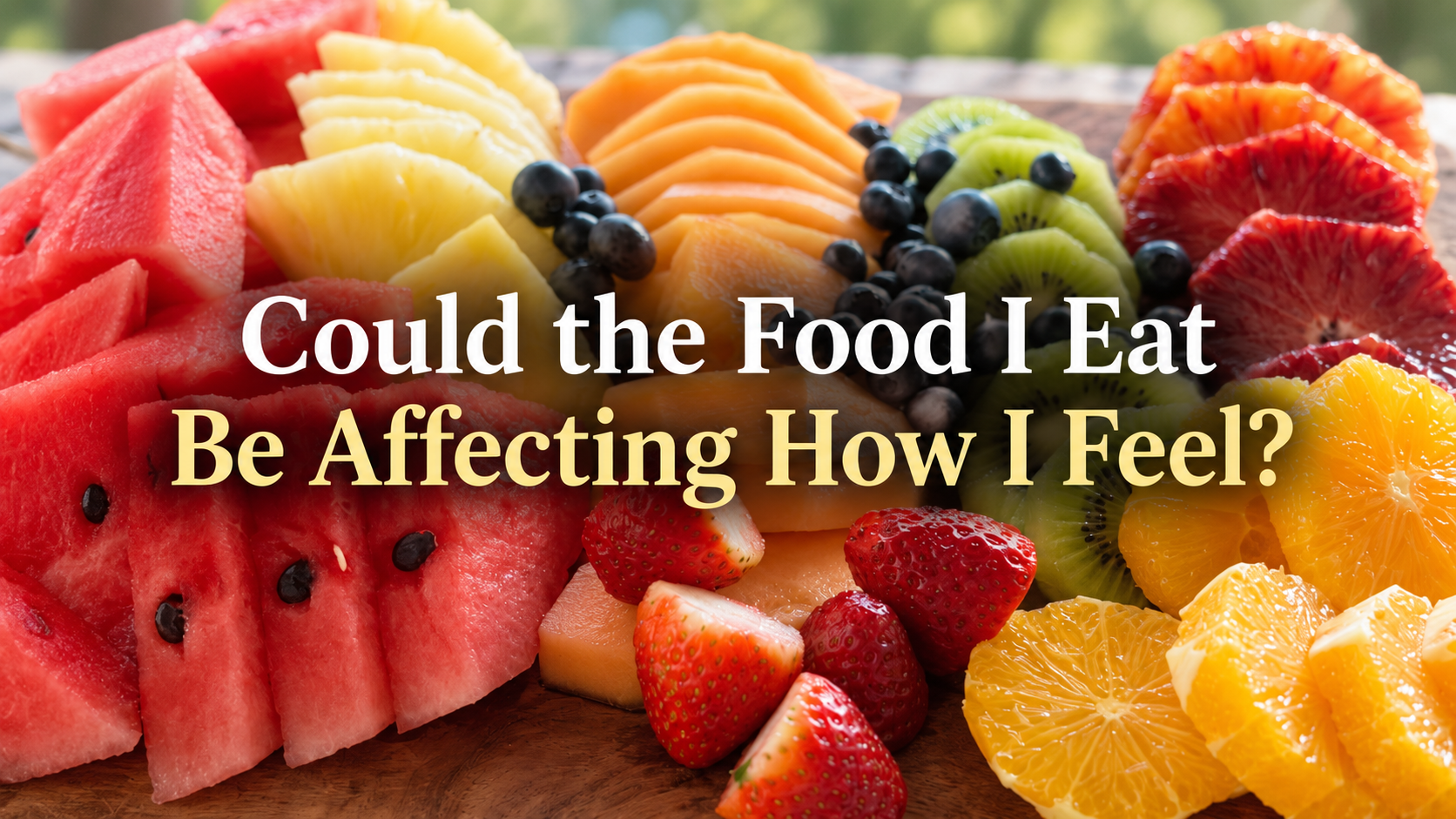
Colour is a useful place to begin.
Different fruits and vegetables contain different nutrients and plant compounds. Whole grains and legumes provide fibre and other nutrients. Protein foods help support the body's normal repair and maintenance processes, while healthy fats also have important roles in the body.
None of this requires perfection.
It requires consistency.
The Problem With Trying to Eat Perfectly
This is where healthy eating often goes wrong.
We decide we are going to "be good."
Suddenly everything in the cupboard is judged as healthy or unhealthy.
We create rules.
We tell ourselves what we are no longer allowed to eat.
Then life happens.
We have a stressful day.
We get home late.
We are tired.
We eat something we had decided was "bad" and immediately feel as though we have failed.
Once that happens, it can be easy to think, "I have ruined it now, so what is the point?"
I do not think that approach helps.
At Fresh Start Wellness, I am much more interested in sustainable choices than perfect ones.
Food should still be enjoyable.
It can be social.
It can be comforting.
It can be something we share with people we love.
Healthy eating for wellbeing does not require removing all enjoyment from food.
It means making nourishing foods the foundation rather than expecting highly processed convenience foods to do most of the work.
Start With One Meal
If thinking about changing your whole diet feels overwhelming, do not change your whole diet.
Choose one meal.
That is the only step I want you to think about.
Perhaps breakfast has become coffee and nothing else.
Could you add something nourishing?
Perhaps lunch is whatever you can find while you are working.
Could you make one small improvement?
Perhaps dinner is where things fall apart because you are exhausted by the end of the day.
Could you make that one meal a little easier and more nourishing?
One meal is manageable.
Once that becomes easier, you can look at something else.
This is very different from waking up on Monday morning and deciding that everything you eat needs to change.
Nourishment Is Part of the Bigger Picture
As Kevin Odonoghue from Fresh Start Wellness, I look at wellbeing as more than one isolated behaviour.
Food matters, but so do sleep, stress, movement, mindset and the environment around us.
They affect each other.
When I sleep badly, I may be more likely to reach for quick energy.
When I am stressed, preparing food may feel like too much effort.
When I have not eaten properly, my energy may fall and movement can feel harder.
That is why I do not want people looking at nutrition as another area where they are failing.
I want them to see it as another place where they can support themselves.
Within the Fresh Start Wellness RESET approach, this begins with Recognise.
Before trying to fix everything, I can recognise what is happening.
Am I skipping meals?
Am I relying heavily on quick snacks?
Am I drinking enough water?
Am I regularly eating foods that actually nourish me?
Once I recognise the pattern, I can make one change.
That is where a fresh start becomes possible.
Food Is Not About Perfection
The most useful thing I have learned about wellbeing is that small choices repeated regularly usually matter more than occasional bursts of perfection.
A healthier life does not require me to eat perfectly every day.
It does not require complicated recipes or expensive ingredients.
It does not require me to become obsessed with everything on my plate.
It starts with respecting the fact that my body is doing an enormous amount for me every minute of every day.
Feeding it well is one way I can support it.
Food really can be powerful.
Not because one particular food magically fixes one particular part of my body, but because nourishment gives my body something it needs to keep doing its job.
So perhaps the question is not:
"Am I eating perfectly?"
Perhaps a better question is:
"Am I giving my body what it needs to feel and function a little better today?"
That is a much easier place to start.
Wellness note: Food can support health and wellbeing, but it is not a substitute for professional medical care or prescribed treatment. Nutritional needs vary from person to person. If you have specific health concerns or dietary requirements, seek advice from an appropriately qualified health professional.